
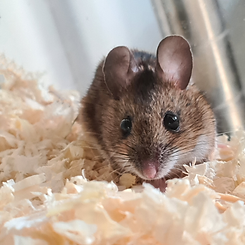
Mouse Extermination
A mouse infestation carries a huge risk. Mice are incontinent and can easily transfer salmonella, ringworm, tapeworms and meningitis, that’s why it’s essential you call a professional as soon as you recognise there’s a problem. We are fast, efficient and effective, with expertise to instantly find the source and provide a solution quickly.
Mouse Prevention
Mice breed rapidly so it is vital that the whole place affected is thoroughly cleared so no mouse is missed. It is also fundamental that there is a mouse prevention plan put in place to reduce the chances of further infestation, as failing to do so could lead to a recurring problem. We are here to help.
If you have noticed signs of dark coloured mouse droppings, nesting materials, chewed food or packaging, unpleasant smells or other visible signs of rodents, please give us a call today!

Rat Extermination
We understand rat invasion can be extremely distressing with their ability to gnaw through wood, plastic, wire and even lightweight steel. They can cause serious damage to your property.
As vermin control specialists we are here to provide the safest, quickest and most effective way to free you from invasion.
Rat Prevention
We don’t just provide professional rat removal, we endeavor to offer the best advice and treatments for an effective, long-term solution. After all, the last thing you want is a future infestation. After undisruptive extermination we will ensure your property or space is rodent proofed so you can feel at ease again.
If you have noticed signs of rat droppings, nesting materials, chewed food or packaging, unpleasant smells or other visible signs of rodents, please give us a call today!

Mole Extermination
Professional trapping or fumigation with phostoxin is the most effective way to control a mole invasion. No need to worry though, this chemical will decompose easily and leave no residual effect on soil so it will not harm plants in the treated area.
Mole Prevention
Ridges and mole holes spoil commercial lawns, flower beds, bowling and golf greens as well as the roots of plants and decorative stoning patterns. If you’re a business owner affected by the cost of this, we can take quick action at the first sign to ensure your problem is treated as soon as possible.
If you think you have got a mole problem destroying your garden or allotment, we can arrange a bespoke treatment plan to effectively eliminate the problem with minimum disruption, just give us a call today!
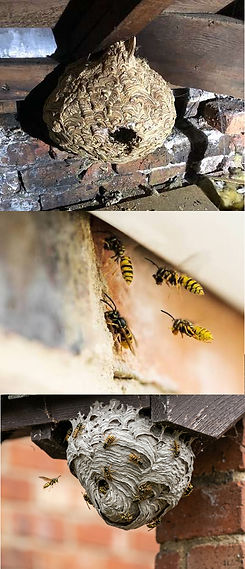
Wasps and Wasp Control in the UK
Wasps are a familiar sight across the UK, particularly during the warmer months. Although they play a useful role in nature, a nest close to a home, workplace or public area can become a serious safety concern.
Understanding how wasps behave, what attracts them and when professional control is appropriate can help you deal with a problem safely and responsibly.
Common wasps in the UK
The two species most commonly encountered around UK homes are the common wasp (Vespula vulgaris) and the German wasp (Vespula germanica). Both have distinctive yellow-and-black markings and live in colonies built around a queen.
The wasp lifecycle usually begins in spring, when a queen emerges from hibernation and searches for a sheltered place to build a nest. Common nesting locations include:
-
Roof spaces, wall cavities and air bricks
-
Sheds, garages and outbuildings
-
Beneath eaves and roof tiles
-
Trees, hedges and bird boxes
-
Underground burrows or abandoned rodent holes
A nest starts as a small paper-like structure but can grow rapidly through spring and summer. Mature colonies may contain thousands of workers.
Are wasps beneficial?
Despite their reputation, wasps have an important ecological role. They hunt caterpillars, flies and other insects to feed their larvae, helping to control some garden pests naturally. They also visit flowers and can contribute to pollination.
For this reason, not every wasp nest needs to be destroyed. A nest that is well away from people and pets can often be left undisturbed. The colony will normally die naturally as colder weather arrives, while newly produced queens leave to hibernate elsewhere. The old nest is not generally reused.
Control becomes more reasonable when a nest presents a genuine risk, such as one beside a doorway, in an occupied loft, close to children or in a busy commercial setting. The British Pest Control Association recommends treatment where wasps pose a threat to health and safety. bpca.org.uk
Signs of a wasp nest
Seeing an occasional wasp does not necessarily mean there is a nest on your property. However, regular activity around one point may indicate a nearby colony.
Typical warning signs include:
-
A steady stream of wasps entering and leaving the same opening
-
Buzzing or scratching sounds inside a wall, ceiling or loft
-
Increased numbers around bins, outdoor dining areas or fallen fruit
-
A visible grey or brown paper-like nest
-
Wasps repeatedly entering an air vent, roof gap or hole in the ground
Watch from a safe distance rather than approaching the entrance. Blocking the hole is not recommended: trapped wasps may find another route into the building, potentially bringing them into occupied rooms.

Grey Squirrels in the UK: Impacts, Management and Control
The grey squirrel (Sciurus carolinensis) is familiar in parks, gardens, and woodlands throughout much of the UK. Introduced from North America during the 19th century, it has adapted extremely well to British conditions. Its success, however, has created serious problems for native red squirrels, commercial forestry, and woodland conservation.
Grey squirrels are classified as an invasive non-native species. Control is therefore undertaken in some areas, but it needs to be lawful, humane and part of a coordinated management plan rather than an isolated response to squirrels visiting a garden.
Effective management begins with a survey. Land managers should establish where squirrels are active, which trees are vulnerable, how severe the damage is and whether red squirrels are present nearby.
Control is most useful when it is:
-
Targeted at vulnerable woodland or red-squirrel conservation areas.
-
Coordinated with neighbouring owners and conservation groups.
-
Timed around local risks and management objectives.
-
Repeated and monitored, because squirrels can recolonise treated areas.
-
Combined with woodland management, rather than treated as a complete solution by itself.
Small, uncoordinated control operations may provide temporary relief but often have limited long-term effect. Government guidance recognises that existing methods may need to be repeated to maintain lower population densities.
Control methods
The principal methods currently used in landscape-scale management are live-capture trapping followed by humane dispatch, approved kill traps and shooting. The appropriate method depends on the country, site, presence of protected species, public access and the operator's competence.
Any trap must be legal for its intended use, inspected as required and positioned to minimise risks to red squirrels, birds and other non-target animals. Shooting must comply with firearms law, animal-welfare requirements and site-specific safety rules.
Poisons, improvised devices and drowning are not acceptable control methods. A householder who simply wants to stop squirrels reaching a loft or bird feeder should concentrate on proofing and prevention and use a competent wildlife-control professional where necessary.
Prevention and woodland management
Control can be supported by practical measures such as:
-
Blocking building access points after confirming that no animal is trapped inside.
-
Protecting vulnerable young trees where feasible.
-
Recording bark damage and squirrel activity consistently.
-
Coordinating action across adjoining woodland.
-
Diversifying woodland structure and species while considering local conservation goals.
-
Reducing easily accessible food around buildings, without disrupting legitimate wildlife conservation work.
Feeding grey squirrels can increase local concentrations and conflict. In areas containing red squirrels, shared feeders may also contribute to disease transmission unless they are managed under appropriate conservation guidance.
The law
Rules are not identical across England, Wales, Scotland and Northern Ireland, so operators must check the guidance applying to the location before acting.
As a general principle, grey squirrels must not be deliberately released into the wild or transported elsewhere for release. Capturing an animal creates legal and welfare responsibilities; it should not be attempted unless the operator already has a lawful plan for dealing with it. Northern Ireland's official guidance, for example, states that a trapped grey squirrel must not be released and must be humanely dispatched.
Other legislation may apply to trapping, firearms, animal welfare, protected sites and non-target species. Red squirrels must not be harmed. Where both species may occur, specialist advice and species-selective procedures are essential.
Humane practice
Being invasive does not remove an animal's protection from avoidable suffering. Anyone carrying out control should be trained and able to identify both squirrel species confidently. Equipment must be maintained, trapping must be actively supervised, and any captured animal must be dealt with promptly and humanely.

Deer: Muntjac - Roe - Fallow - Red
As a landowner, farmer or estate manager, if you have a deer problem, please give me a call to discuss your
issues and we can discuss a plan to reduce deer numbers effectively.
I have been involved in deer management for a period of 35 years. Not just stalking deer in the wild but also deer parks and on the farm.
Deer can cause major garden damage in the UK by browsing shoots, stripping bark and trampling plants. The most effective approach is physical exclusion, supported by sensible planting and legal, humane deterrence.
Protecting a garden
Fencing: Use strong deer fencing 1.8-2.0 m high. Secure the bottom so deer cannot push underneath and avoid leaving gaps around gates.
Protect individual plants: Fit tree guards or wire-mesh cages around young trees, fruit trees, and valuable shrubs. Guards should be wide enough to prevent browsing through the mesh.
Use repellents: Commercial scent or taste repellents can work temporarily, particularly when alternated and reapplied after heavy rain.
Remove attractants: Clear fallen fruit and avoid placing feed where deer can reach it.
Choose less-palatable plants: Aromatic, prickly, or tough-leaved plants are often less attractive, but no plant is completely deer-proof, especially when food is scarce.
Try motion deterrents: Water sprayers can help in smaller gardens. Lights and ultrasonic devices often become less effective as deer get used to them.
Protect new planting first: Fresh shoots, roses, vegetables, young trees, and coppice regrowth are particularly vulnerable.
Deer control
UK deer management is regulated and varies across England, Wales, Scotland and Northern Ireland. Do not use poison, snares, improvised traps or weapons. Shooting is normally only appropriate for a trained, competent person with lawful authority, a suitable firearm and safe land on which to operate. Close residential gardens are often unsuitable.
For recurring problems
Identify where deer enter and the species involved.
Improve fencing and protect vulnerable plants.
Speak with neighbouring landowners if deer move across several properties.
For population control, use a qualified deer manager or professional pest/wildlife-control operator familiar with local law.
Contact the police if an injured deer presents an immediate road or public-safety hazard, otherwise seek advice from a wildlife rescue organisation or veterinarian.
Avoid feeding deer. It can concentrate animals, increase disease transmission, and make garden damage worse.
Wild Deer Control in the UK
Wild deer are an important part of the UK's natural heritage, but their populations must be carefully managed. With few natural predators and plentiful food, deer numbers can grow rapidly. Excessive populations may damage woodland, prevent young trees from regenerating, destroy crops and increase the risk of road accidents.
Deer control aims to maintain healthy populations at levels the surrounding environment can support. Common methods include protecting vulnerable trees with fencing, managing habitats, and carrying out regulated culling. Culling must be conducted legally, humanely and by trained or competent people, following the relevant firearms, animal-welfare and deer-management rules.
Effective control requires cooperation between landowners, farmers, foresters, conservation organisations, and local communities. Monitoring deer numbers and vegetation damage helps managers decide where action is needed. When based on evidence and conducted responsibly, deer management can protect habitats and crops while supporting healthy, sustainable wild deer populations.

Rabbit Control in the UK
Wild rabbits can cause serious problems for farms, gardens, sports grounds and conservation areas across the UK.
They eat crops, damage young trees and plants, and create burrows that may weaken banks or make land unsafe. Effective control helps reduce this damage while protecting animal welfare and the wider environment.
The best approach usually combines several methods. Rabbit-proof fencing can protect valuable crops and woodland, while guards may be placed around individual trees. Landowners can also reduce shelter by managing dense vegetation and blocking disused burrows where lawful and appropriate. Trapping, shooting and other control methods may be considered when prevention alone is insufficient.
Any control work must comply with current wildlife, firearms, trapping and animal-welfare laws. Some methods and substances are prohibited or tightly regulated, and non-target animals must not be put at risk. Control should therefore be planned carefully and carried out by trained, competent people.
Regular monitoring is essential because rabbit populations can recover quickly. A coordinated programme involving neighbouring landowners is often more successful than isolated action. By combining prevention, lawful population control and continued monitoring, rabbit damage can be managed safely, humanely and effectively.
Fox Control in the UK
Foxes can cause problems on farms, game estates and in urban areas by taking poultry, disturbing waste and occasionally damaging property. However, control should be proportionate and based on clear evidence of harm.
Prevention is usually the best first step. Secure poultry in strong housing, use buried or outward-facing fencing, remove accessible food and protect bins and compost areas. Scaring devices may provide temporary protection, but foxes can become accustomed to them.
Where lethal control is considered necessary, it must follow UK wildlife, firearms and animal-welfare laws. Some methods, including poisoning foxes, are illegal. Control should be undertaken only by competent people using lawful and humane methods.
Long-term success depends on removing food sources and improving barriers. Simply killing individual foxes may provide only temporary relief because other foxes can move into the vacant territory.

Insect Control in the UK
Insects can become a nuisance in homes, businesses, farms and gardens. Common pests include ants, wasps, flies, fleas, cockroaches and clothes moths. Some contaminate food or damage property, while others may bite, sting or spread disease.
Effective control begins with correct identification. Food should be stored securely, bins kept closed, leaks repaired and cracks sealed to remove insects' access to food, water and shelter. Traps and targeted treatments may be used when preventive measures are insufficient.
Pesticides should always be used according to their labels and kept away from children, pets and wildlife. Serious or persistent infestations are best handled by a qualified pest-control professional. Wherever possible, control should target the problem species while protecting beneficial insects such as bees, butterflies and natural predators.